 Leaving Babylon pgs. 36-39

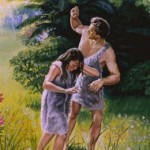
That day in Eden, our hope changed. Hope is our feeling of expectation and desire for a certain thing to happen. Hope is our grounds for believing that something good may happen. Hope is our feeling of trust. This comforting and reassuring ingredient of the human heart was forever altered that day in Eden. It was the day we were introduced to doubt, unbelief, and despair.
Hope is what we owned in Eden. It was created within our essence as children of God. With that hope came a perfect peace in our souls and spirits as we were united with our Father God. The hope that we had in God left no room for worry, for we totally trusted that He would be there for us.
Before sin we were blessed by God and given a fruitful and abundant plan for our lives. In addition, we had God’s complete approval. We had the protection, support, assurance, and love of the Creator of the universe. We lived in complete peace and joy and had great hopes for the days ahead. We had no fears about tomorrow, for God was with us. He was our hope, He blessed us and saw us as good, according to Genesis 1:28 and 31.
After our sin, our hope and peace was arrested and replaced with all types of fears and stresses about the days ahead. We began to live each day with overwhelming insecurity—afraid of everything and everyone under the sun. We became consumed with the thought of losing what we had gained the day before. This led to arguments and fighting with our fellow man about the essentials we needed for life. Before our sin, there was always enough, for God saw to it. But after our sin, the fear of starvation, homelessness, and mistreatment were ever with us. Our hope was based on our own strength instead of God’s (Gen. 3:17–19, 23–24).
Through thousands of years of struggles, we have learned that living is about more than having comforts to our flesh for the day or having the “knowledge of good and evil.” It is about hope for tomorrow—a secure hope that cannot be stolen, destroyed, or lost to despair. We have learned the value of living in peace—the peace that we lost in the garden when we gave away our hope.
We had relinquished our hope to an evil taskmaster— someone who hated us as much as he hated our Creator. This is the definition of true hopelessness, to exist in the hands of evil with no way to rescue yourself or for anyone to rescue you. There was no one in the entire human race who could stand up to the evil we chose in the garden. We were utterly hopeless until God sent Jesus Christ! Jesus restored our grounds for believing! Jesus restored our Hope!
Because of Jesus, we can now hope in the glory of God. Our fears and insecurities can be arrested as we turn our lives over to Him. Jesus replaced our hopelessness with His glory! He makes our lives symbols of praise, worship, and thanksgiving to God. In His glory, we can enjoy magnificence and great beauty, as He restores to each of us the distinctiveness for which we were created. Hope lives in God.
We do not have to exist and die unfulfilled and blending in with the common sorrows of human living. He calls us out of Babylon to our hope and destiny. He takes the broken pieces of our lives and makes them into icons of His glory on the earth.
Our lives are like a beautiful vase originally designed to hold the glory of God. But then we were smashed to pieces by the hands of cruelty—our glory and hope lost to us. Then came the Potter, the Creator of the vase, offering to restore that which was broken and filling us again with His glory.
Some dear friends of mine capture the essence of the lost and restored hope and glory of humanity in the artwork and poem below. The drawing is the work of the artist Kay Singleton, and the poem is by her mother-in-law, Gaylee Singleton.
The Blue Vase
A beautiful Blue Vase, treasured and loved made to adorn the Master’s house. A beautiful Blue Vase, stolen and cast to the ground by a stranger’s cruel hands Broken, shattered in so many pieces. The beauty of the Vase as it was before. No hand of man could ever restore 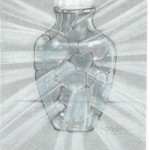
A beautiful Life treasured and loved. Made to adorn the Father’s house. A beautiful Life stolen, bruised and abused by this life’s cruel hands. No hand of man can heal this wounded heart, Can mend the broken life and make the vessel whole again.
But God is not a man. He alone can do what no other power can! He alone can bind up wounds, can heal, restore a broken vessel, shattered life or wounded heart.
He can find each piece, gently bind it in place, and make it more beautiful than ever before. Till once again a vessel pure, treasured and adored.
A multifaceted work of art, sparkling all around. A vessel filled with light and love will now adorn the Father’s house. A vessel f it to show the World
The handiwork of God!
(Gaylee Singleton, “The Beautiful Blue Vase”)


{ 0 comments… add one now }